
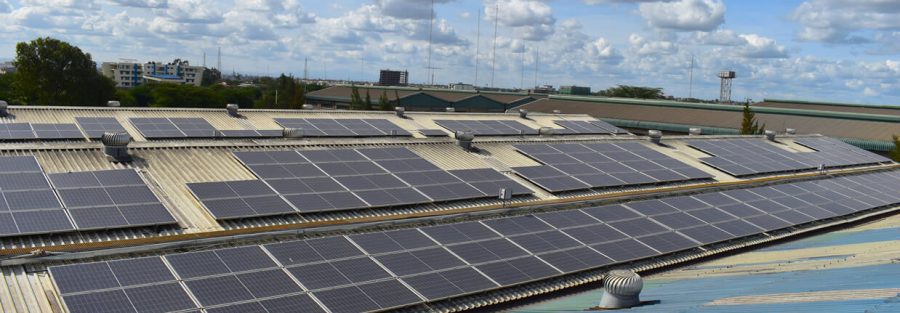
Every carton that leaves Allpack Industries carries a commitment to efficiency and sustainability. Based in Mlolongo, Machakos County, Allpack has spent decades establishing itself as one of Kenya’s leading manufacturers of corrugated cartons, serving sectors from Fast Moving Consumer Goods (FMCG) to horticulture and floriculture. Yet, as the company has expanded, so has its energy consumption. With a commitment to reduce energy use by 10% by 2030, Allpack is redefining how efficiently it operates.
Today, the factory runs on a mix of energy sources, including solar power, electricity from the grid, and biofuel consumed from its biomass boiler. Within the factory, high-demand processes involving the corrugator, printing machines and boiler remain the largest energy consumers, making them an initial key focus for optimisation.
To address this, Allpack has embedded the following energy efficiency measures:
- Process monitoring and maintenance systems: An Integrated Energy System (IES) is used to track machine efficiency and compare energy use against output. This enables better performance tracking and continuous improvement planning. In addition, a structured weekly maintenance schedule is used to enhance reliability and efficiency.
- Compressed air system optimisation: Through improved demand management, the factory reduced compressor usage from three units to two (one 55 kW and one 22 kW compressor), significantly improving efficiency and lowering energy consumption.
- Smart lighting and solar integration: Automated timers across the factory, programmed to switch on at specific time. In addition, 11 solar-powered lights (60W and 100W) have been installed within the factory, further reducing reliance on grid electricity. Overall, solar energy now contributes approximately 22% of the factory’s total energy use.
- Equipment efficiency improvements: Standard V-belts are being replaced with cogged V-belts to improve machine efficiency and reduce energy losses, while there is also an ongoing plan to upgrade motors to high-efficiency models.
- Staff sensitisation: Staff have been trained on energy management, supported by workplace posters that reinforce responsible energy-use behaviours across the factory.
- Leak prevention in steam systems: Regular sealing of steam and condensate leaks are carried out to prevent energy losses and improve overall system performance.
As these initiatives continue to take shape, the results are already tangible. In 2025, Allpack reduced their energy consumption by 9% compared to 2024, while greenhouse gas emissions dropped by 18.5%, efficiency falling to 404.8 tCO₂e against a target of 555 tCO₂e for that year.
“We always aim for efficiency,” says Christopher Adero, Head of Safety, Security and Environment at Allpack Industries. The introduction of the Global Efficiency (GE) system has provided real-time visibility into machine performance per hour.” This has made it easier to identify operational inefficiencies and respond quickly with targeted improvement actions.He adds.
In July 2024, Allpack reinforced its commitment by conducting a comprehensive energy audit. The outcome was a structured Energy Management Plan for 2026–2030, approved by Energy and Petroleum Regulatory Authority (EPRA), setting a roadmap for sustained improvement.
This dedication has not gone unnoticed, Allpack was recognised at the 2025 Kenya Association of Manufacturers Awards, where they were named 1st Runners-Up in the Renewable Energy Award (Band III Energy Consumers). Allpack remains committed to driving performance efficiently, reducing environmental impact, and positioning the company for a more sustainable future.
By Annabelle Shikanda & Michelle Muriithi